
How H.R. 5371 Is Set to Reshape the Hemp Industry
The funding bill that ended the government shutdown on November 12, 2025, was H.R. 5371, a continuing resolution that extended government funding through January 30, 2026. The bill provided year-long funding for three appropriations bills for the Agriculture, Military Construction and Veterans Affairs, and Legislative branches, while using a short-term extension for the rest of the government. Key provisions also included ensuring furloughed federal employees would be paid and that no further layoffs would occur through January 30.
https://www.congress.gov/bill/119th-congress/house-bill/5371/text
When most people think about federal spending bills, they don’t expect to find language that could redefine an entire industry. But that’s exactly what happened with H.R. 5371, the FY 2026 appropriations and government-funding package, which includes one of the most consequential updates to hemp regulation since the 2018 Farm Bill.
If you’re in the hemp beverage space — or anywhere near hemp-derived cannabinoids — what’s buried in this bill is a big deal. Here’s what it means, why the industry is paying attention, and how brands need to prepare long before the enforcement date hits.

A Quick Primer: What H.R. 5371 Actually Is
H.R. 5371, signed into law on November 12, 2025, is the Continuing Appropriations, Agriculture, Legislative Branch, Military Construction and Veterans Affairs, and Extensions Act, 2026. Scarinci Hollenbeck+2CannaMD Marijuana Doctors & Cards+2
Typical government funding bill, right?
Not exactly.
Tucked into the agriculture section is new language that significantly changes the federal definition of “hemp” — and by extension, the legal status of many hemp-derived products currently on the market. Ice Miller+2CannaMD Marijuana Doctors & Cards+2
The Big Shift: Redefining Hemp Itself
1. A New THC Standard — Not Percentage-Based, but Per Container
Under the 2018 Farm Bill, hemp was defined such that:
- “The plant Cannabis sativa L. and any part thereof… with a Δ-9-tetrahydrocannabinol concentration of not more than 0.3 percent on a dry weight basis.” CannaMD Marijuana Doctors & Cards+1
- This threshold focused only on Δ-9 THC, and on plant material.
H.R. 5371 rewrites that. Among its changes:
- The language includes “total tetrahydrocannabinols (including tetrahydrocannabinolic acid)” in the definition. CannaMD Marijuana Doctors & Cards+2Scarinci Hollenbeck+2
- Finished consumer products will be limited to no more than 0.4 mg total THC (including THCA, Δ-8, Δ-10, etc) per retail container. Scarinci Hollenbeck+2CannaMD Marijuana Doctors & Cards+2
- This cap specifically targets “consumer-facing containers” (jar, bottle, can, blister pack) and is effective one year after the statute’s enactment. Ice Miller+1
2. Non-Δ-9 Cannabinoids and Synthetic Conversions Are Included
- The new definition excludes cannabinoids that are “not capable of being naturally produced by a Cannabis sativa L. plant”; or cannabinoids “capable of being naturally produced … but that were synthesised or manufactured outside of that plant.” CannaMD Marijuana Doctors & Cards
- It also covers “any other cannabinoids that have similar effects (or are marketed to have similar effects) on humans or animals as a tetrahydrocannabinol.” Scarinci Hollenbeck+1
This means many Δ-8 THC, Δ-10 THC, HHC, THCA-rich flower, or converted CBD-distillate products will almost certainly not qualify as “hemp” under the new definition.
3. A One-Year Grace Period
The law provides a 365-day window before full enforcement kicks in. Scarinci Hollenbeck+1
In practical terms: from November 12, 2025 → November 12, 2026.
During this window, brands must plan for compliance or pivot.
What This Means for Hemp-Derived THC Beverages
If you’re in the ready-to-drink hemp beverage market, this section is critical.
Your Current SKUs Are Probably Not Compliant
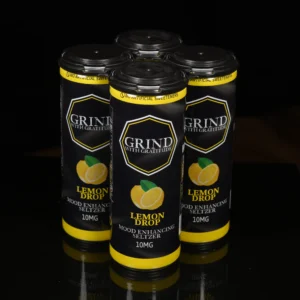
Any beverage with more than 0.4 mg total THC per container (which is almost all current functional / infused hemp beverages) will not qualify as hemp under the new federal definition.
Many products today list 2 mg, 5 mg, 10 mg, or more of THC/THCA per unit — well above the cap. Scarinci Hollenbeck+1
If your formula relies on Δ-8, Δ-10, HHC or synthetically converted cannabinoids, it also falls into exclusion risk.
Distribution Models Will Change
- If your distribution crosses state lines, your product may no longer qualify as federally recognized hemp → triggers controlled substance risk.
- Retailers/distributors will demand proof of compliance (containers, label, lab tests, total THC) to maintain shelf access.
- States may respond by tightening their own rules or shifting enforcement responsibility to local regulators.
Banking, Payment, Insurance & Tax Risk
- If your product transitions from “legal hemp” to “non‐hemp” (i.e., controlled substance) status, expect banking and payment processor relationships to change or be terminated.
- Insurance policies may exclude products no longer compliant federally.
- Tax treatment may shift (for example if you pivot into regulated cannabis channels, triggering § 280E risks). Scarinci Hollenbeck
Why This Matters for Investors & Operators
The intoxicating‐hemp market (including alt-cannabinoids, infused beverages, edibles) was built on the regulatory gap left by 2018. Now that gap is closing.
Structural Risk = Strategic Opportunity
- Brands that recognise this early and adapt will have competitive advantage.
- Reformulation and pivot planning now = survival.
- Clear investor communication about this regulatory transition is essential.
Hemp Isn’t Dead — But The Grey Zone Is
Non-intoxicating hemp uses (fibre, seed, low-THC isolate) remain intact.
The big change is that intoxicating hemp (edibles/infused drinks) is being steered toward the regulated cannabis channel (or severely limited under hemp rules).
The bill effectively channels higher-THC cannabinoid commerce into state-licensed cannabis markets. Akerman LLP
What Good Operators Should Do Next
1. Audit Your Portfolio
- List all SKUs.
- Compute “total THC per container” (including Δ-9, THCA, isomers, similar effect cannabinoids).
- Identify any SKUs above 0.4 mg or relying on excluded cannabinoids.
2. Start Reformulation Immediately
- Develop non-intoxicating versions (below threshold) OR plan to pivot to adult-use cannabis licence model.
- Adjust sizing, packaging, container definitions (know what constitutes a “container” under final guidance).
3. Strengthen Testing & Labeling Infrastructure
- Ensure labs test total THC (post-decarboxylation) including all isomers.
- Label containers with THC journal compliance as needed.
4. Map State Requirements
- For each state in your east-coast distribution footprint (NC, VA, FL, etc.), determine state law definitions, grace-period transitions, and enforcement timelines.
- Some states may act quicker than federal rule, others may use the federal changes as a trigger.
5. Communicate with Investors & Stakeholders
- Disclose: “Regulatory transition risk: federal hemp redefinition effective Nov 2026.”
- Present scenario planning: Reformulate → compliance, or pivot → adult-use model.
6. Monitor FDA/USDA/HHS Guidance
- The law directs agencies to publish:
- A list of naturally-produced cannabinoids.
- A list of cannabinoids with THC-like effects.
- Definition of “container” for cap enforcement. Scarinci Hollenbeck+1
- These will shape how “similar effects” is interpreted, how container caps are measured, and how enforcement is executed.
Bottom Line
H.R. 5371 is more than a funding bill — it’s a federal course-correction that will reshape the hemp industry for years to come.
The era of loophole-driven intoxicating hemp (high-THC beverages, edibles, alt-cannabinoids) is ending, and a new, more tightly regulated marketplace is emerging.
For brands that plan ahead, restructure smart, and build compliance into their strategy early, there’s still a major runway of opportunity.
For those that don’t? November 2026 will hit hard.